JellyPages.com

Monday, March 18, 2013

Neo-Classicism: The Rape of the Lock by Alexander Pope


Neo-Classicism


Neoclassical literature is writing from a period spanning roughly 150 years, covering 1660 - 1798. Relying on the classic styles of the ancient Greeks and Romans, its main characteristic is an emphasis on logic, common sense, properness and adequate performance in society. Largely a response to the previous chaos of the Renaissance, the writings of this time included a variety of genres, including novels, diaries, essays and satires. Grammar and word study became more formalized, with authors preferring simplicity. Although writing eventually transitioned to more Romantic concepts, the influence of Neoclassical thought is still evident today.

Experts divide Neoclassical literature into three major sections: Restoration, Augustan and Johnson. The first section spans approximately 1660 - 1700, while the second, referencing the original Augustan writers such as Horace, covers 1700 - 1750. The generally accepted years for the Johnson division are 1750 - 1798.

This period in literature, and other forms of art, was largely a response to the Renaissance. During this earlier time, people focused on invention and experimentation, using science to explain the world around them. This was a dramatic shift in thought, because the Roman Catholic Church long had been the primary source of information. The Neoclassicists generally didn’t want to abandon this study entirely, but they thought that the Renaissance methods were too chaotic, so they stressed a return to ancient Greek and Roman classicism. Much of this was because, after a period of considerable political instability and conflict, Europe — especially Great Britain — wanted to redefine itself, with many people rethinking what roles they had and whether they were playing them the right way.

With people generally looking more closely at the part they played in society, the main themes of the Neoclassical period were restraint and order. Each person was expected to do what was “proper” and to show that he or she had good taste, the idea being that, given the flawed nature of mankind, putting some limits on what someone said or did was better than trying and failing at the outrageous. It became very important to prove that someone had a decent level of intelligence. Writers often used their works not only to express rules about etiquette and decorum, but also to demonstrate brilliant skills of wit.

The emphasis on order, reason, etiquette and wit made certain styles of literature more popular than others. Diaries, essays, letters and first person narratives were extremely successful, because they concentrated at what a single person thought or accomplished, which was in line with the Neoclassical idea of analyzing and reforming a person’s social role. Moral fables were a favorite, as well, as were parodies and burlesques. Novels in various styles developed rapidly, becoming a main entertainment for women in the home. The rhymed couplet — specifically, the heroic couplet — dominated poetry, and in the theater, audiences flocked to sentimental comedies, comedies of manners and heroic dramas.
Journalism became well accepted and significantly shaped society during the period. Writers in this field frequently used their talents to promote “proper” goods, services and events. They also reported on weddings, because these were often primarily unions of convenience that were closely tied to the flow of money and the general economy.


SYNOPSIS


In the beginning of this mock-epic, Pope declares that a "dire offence" (Canto 1 line 1) has been committed. A lord has assaulted a "gentle belle"(line 8), causing her to reject him. He then proceeds to tell the story of this offence.

It begins with Belinda still asleep. Her "guardian Sylph"(line 20), named Ariel, warns her while she sleeps that "some dread event [impends], Ere to the main this morning sun descend; But Heaven reveals not what, or how, or where; Warned by the Sylph, oh pious maid beware!"(line 109-110). Belinda then awakes and proceeds to get ready for the day with the help of her maid, Betty. The Sylphs, though unseen, also contribute. "These set the head, and those divide the hair, some fold the sleeve, whilst others plait the gown"(line 146-147). Belinda appears so beautiful that as she journeys to Hampton Court (canto 3 line 1-10) "every eye was fixed on her alone"(Canto 2 line 6). Here Pope also describes Belinda's two locks of hair "which graceful hung behind"(line 20). The Baron, one of Belinda's suitors, greatly admires these locks and conspires to steal one. He builds an altar and on it places "all the trophies of his former loves"(line 40), sets them on fire, and fervently prays "soon to obtain, and long posses"(line 44) the lock.

Ariel, disturbed by the impending event, though he does not know what it will be, summons many sylphs to him and instructs them to guard Belinda from anything that may befall her, whether she "forget her prayers, or miss a masquerade, Or lost her heart, or necklace, at a ball"(line 108-109). These spirits hover over Belinda, anxious to protect her as she arrives at Hampton Court. Here she is invited to play a game of ombre, which game she wins.
The Baron still conspires to get her lock. He acquires a pair of scissors and tries to snip it off. The Sylphs sent to watch over her, intervene by blowing "back the hair" and twitching "the diamond in her ear"(canto 3 line 136-137), causing Belinda to look around, and stopping the Baron in his plans. This happens three times, but in the end the Baron manages to cut off the lock (also cutting a Sylph in two, but Pope reassures us that "airy substance soon unites again [line 152]). When Belinda discovers her lock is gone, she falls into a tantrum, with "living lightning" flashing in her eyes"(line 155). The Baron celebrates his victory.

A gnome name Umbriel journeys to the Cave of Spleen and from the Queen receives a bag of "sighs, sobs, and passions, and the war of tongues"(canto 4 line 84) and a vial filled "with fainting fears, soft sorrows, melting griefs, and flowing tears"(line 85-86) and brings them to Belinda. He finds her dejected in the arms of the woman Thalestris, and pours the bag and vial over them both. This causes all the emotions from the bag and vial to fill them.

Many people, moved by Belinda's grief over her lock, demand it back, but the Baron is unrepentant and refuses. Clarissa admonishes them to keep their good humor, but they don't listen and "called her prude"(canto 5 line 165), and instead a court battle ensues between the nobles. Their weapons are glares, songs, and wits. Belinda fights with the Baron and throws snuff up his nose to subdue him. She threatens to kill him with a bodkin (a sharp hairpin). She demands that he restore the lock, but they soon discover that it has been completely lost. They search everywhere for it, but cannot find it.

At the end, Pope tells us to "trust the Muse--for she saw it upward rise...A sudden star, it shot through liquid air, and drew behind a radiant trail of hair"(canto 5 line 252-257). Belinda's lock of hair became a star and "this lock the Muse shall consecrate to fame, and 'midst the stars inscribe Belinda's name"(line 280). Even when we are all dead and gone, Belinda's lock of hair shall live on forever.


ANALYSIS


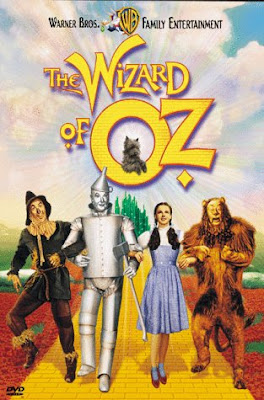
Archetypal Criticism: The Wizard of Oz


ARCHETYPAL CRITICISM


Archetypal literary criticism is a type of critical theory that interprets a text by focusing on recurring myths and archetypes (from the Greek archē, or beginning, and typos, or imprint) in thenarrative, symbols, images, and character types in a literary work. As a form of literary criticism, it dates back to 1934 when Maud Bodkin published Archetypal Patterns in Poetry.

Archetypal literary criticism’s origins are rooted in two other academic disciplines, social anthropology and psychoanalysis; each contributed to the literary criticism in separate ways, with the latter being a sub-branch of the critical theory. Archetypal criticism was its most popular in the 1940s and 1950s, largely due to the work of Canadian literary critic Northrop Frye. Though archetypal literary criticism is no longer widely practiced, nor have there been any major developments in the field, it still has a place in the tradition of literary studies.
Archetypal criticism argues that archetypes determine the form and function of literary works, that a text's meaning is shaped by cultural and psychological myths. Archetypes are the unknowable basic forms personified or concretized in recurring images, symbols, or patterns which may include motifs such as the quest or the heavenly ascent, recognizable character types such as the trickster or the hero, symbols such as the apple or snake, or images such as crucifixion (as in King Kong, or Bride of Frankenstein)--all laden with meaning already when employed in a particular work.

Archetypal criticism gets its impetus from psychologist Carl Jung, who postulated that humankind has a "collective unconscious," a kind of universal psyche, which is manifested in dreams and myths and which harbors themes and images that we all inherit. Literature, therefore, imitates not the world but rather the "total dream of humankind." Jung called mythology "the textbook of the archetypes”
.
Archetypal critics find New Criticism too atomistic in ignoring intertextual elements and in approaching the text as if it existed in a vacuum. After all, we recognize story patterns and symbolic associations at least from other texts we have read, if not innately; we know how to form assumptions and expectations from encounters with black hats, springtime settings, evil stepmothers, and so forth. So surely meaning cannot exist solely on the page of a work, nor can that work be treated as an independent entity.
Archetypal images and story patterns encourage readers (and viewers of films and advertisements) to participate ritualistically in basic beliefs, fears, and anxieties of their age. These archetypal features not only constitute the intelligibility of the text but also tap into a level of desires and anxieties of humankind.


SYNOPSIS


Dorothy Gale (Judy Garland) is an orphaned teenager who lives with her Auntie Em (Clara Blandick) and Uncle Henry (Charley Grapewin) on a Kansas farm. She daydreams about going "over the rainbow" after Miss Gulch (Margaret Hamilton), a nasty neighbor, hits Dorothy's dog Toto (Terry) on the back with a rake, causing Toto to bite her. Miss Gulch shows up with an order to take Toto to the sheriff to be euthanized, but Toto jumps out of the basket on the back of Miss Gulch's bicycle and runs back to Dorothy. Fearing that Miss Gulch, who does not know that Toto has escaped, will return, Dorothy takes the dog and runs away from home. She meets an itinerant phony fortune teller, Professor Marvel (Frank Morgan), who immediately guesses that Dorothy has run away. Pretending to tell her fortune and wishing to reunite Dorothy with her aunt, he tells her that Auntie Em has fallen ill from worry over her.

Dorothy immediately returns home with Toto, only to find a tornado approaching. Unable to reach her family in their storm cellar, Dorothy enters the house, is knocked unconscious by a loose window, and apparently begins to dream. Along with her house and Toto, she's swept from her sepia-toned world to the magical, beautiful, dangerous and technicolor land of Oz. The tornado drops Dorothy's house on the Wicked Witch of the East, killing her. The witch ruled the Land of the Munchkins, little people who think at first that Dorothy herself must be a witch. The Wicked Witch of the West (Margaret Hamilton again), who is the sister of the dead witch, threatens Dorothy. But Glinda (Billie Burke), the Good Witch of the North, gives Dorothy the dead witch's enchanted Ruby Slippers, and the slippers protect her. Glinda advises that if Dorothy wants to go home to Kansas, she should seek the aid of the Wizard of Oz, who lives in the Emerald City. To get there, Dorothy sets off down the Yellow Brick Road.

Before she's followed the road very far, Dorothy meets a talking scarecrow whose dearest wish is to have a brain. Hoping that the wizard can help him, the Scarecrow (Ray Bolger) joins Dorothy on her journey. They come upon the Tin Woodman (Jack Haley), who was caught in the rain and is so rusty he can't move. When they oil his joints so he can walk and talk again, he confesses that he longs for a heart; he too joins Dorothy. As they walk through a dense forest, they encounter the Cowardly Lion (Bert Lahr), who wishes for courage and joins the quest in the hope that the wizard will give him some. Dorothy's three friends resemble the three farmhands who work for Dorothy's aunt and uncle back in Kansas.

On the way to the Emerald City, Dorothy and her friends are hindered and menaced by the Wicked Witch of the West. She incites trees to throw apples at them, then tries to set the scarecrow on fire. Within sight of the city, the witch conjures up a field of poppies that cause Dorothy, Toto, and the lion to fall asleep. Glinda saves them by making it snow, which counteracts the effects of the poppies.

The four travelers marvel at the wonders they find in the Emerald City and take time to freshen up: Dorothy, Toto and the Lion have their hair done, the Tin Woodman gets polished, and the scarecrow receives an infusion of fresh straw stuffing. As they emerge looking clean and spiffy, the Wicked Witch appears on her broomstick and skywrites "Surrender Dorothy" above the city. The friends are frustrated at their reception by the "great and powerful" Wizard of Oz (Frank Morgan again) -- at first he won't receive them at all. When they finally see him (the doorkeeper lets them in because he had an Aunt Em himself), the Wizard declines to help them until they bring him the broomstick of the Wicked Witch of the West. Daunted but determined, they set off again.

The witch sends winged monkeys to attack Dorothy's party before they reach her castle; the monkeys snatch Dorothy and Toto and scatter the others. When the witch finds that the Ruby Slippers can't be taken against Dorothy's will as long as the girl is alive, she turns her hourglass and threatens that Dorothy will die when it runs out. Meanwhile, Toto has escaped and run for help. Dressed as guardsmen, the Lion, the Tin Man, and the Scarecrow sneak into the castle and free Dorothy. They're discovered before they can escape, however, and the witch and her guards corner them and set the Scarecrow on fire. Dorothy douses him with a pail of water, splashing the witch by accident. The water causes the witch to disintegrate ("I'm melting!"). The guards are happy to let Dorothy have the witch's broomstick, and Dorothy and her friends return to the Emerald City.

The wizard isn't pleased to see them again. He blusters until Toto pulls aside a curtain in the corner of the audience chamber to reveal an old man who resembles Professor Marvel pulling levers and speaking into a microphone -- the so-called wizard, as the Scarecrow says, is a humbug. He's abashed and apologetic, but quickly finds ways to help Dorothy's friends: a diploma for the Scarecrow, a medal of valor for the Lion, and a testimonial heart-shaped watch for the Tin Man. Then he reveals that he's from Kansas himself and came to Oz in a hot-air balloon, in which he proposes to take Dorothy home.

The wizard appoints the Scarecrow, Tin Man, and Lion rulers of Oz in his absence. Just as the balloon is about to take off Toto runs after a cat and Dorothy follows him. Unable to stop, the wizard leaves without Dorothy. But Glinda appears and explains that Dorothy has always had the power to get home; Glinda didn't tell her before because Dorothy wouldn't have believed it. Bidding her friends a tearful good-bye, Dorothy taps her heels together three times, repeats "There's no place like home," and the Ruby Slippers take her and Toto back to Kansas.
Dorothy wakes up in her own bed with Auntie Em and Uncle Henry fussing over her. Professor Marvel and the farmhands Hunk (Ray Bolger again), Hickory (Jack Haley again), and Zeke (Bert Lahr again) stop by to see how she's doing. She raises indulgent laughter when she tells them about Oz, but she's so happy to be home she doesn't mind that they don't believe her. Miss Gulch is never mentioned again.


ANALYSIS


Sunday, March 17, 2013

Genre Criticism: Paradise Lost by John Milton


Milton paradise.jpg


GENRE CRITICISM


Genre criticism is a method within rhetorical criticism for analysing speeches and writing according to the symbolic artifacts they contain. In rhetoric, the theory of genre provides a means to classify and compare artifacts of communication and to assess their effectiveness and/or contribution to a community. By grouping artifacts with others of similar formal features or rhetorical exigencies, rhetorical critics can shed light on how authors use or flout conventions in order to meet their needs. Genre criticism has thus become one of the main methodologies within rhetorical criticism.

While genres have been used to classify speeches and works of literature since the time of Aristotle, genre did not emerge as a critical tool to describe and analyze texts until the 20th century. Since then, genre criticism has taken three turns. The first turn, represented by Mikhail Mikhailovich Bakhtin, among others, focused on the formal features of communication. The second turn, represented by Carolyn Miller, among others, focused on recurring socio-cultural circumstances. In the latest turn, critics have begun applying formalist and socio-cultural concepts to new media artifacts that tend to resist classification in traditional genre categories.


SYNOPSIS


The poem is separated into twelve "books" or sections, and the length of each book varies greatly (the longest being Book IX, with 1,189 lines, and the shortest Book VII, having 640). The Arguments at the head of each book were added in subsequent imprints of the first edition. Originally published in ten books, in 1674 a fully "Revised and Augmented" edition with a new division into twelve books was issued. This is the edition that is generally used today.

Milton's story has two narrative arcs: one is of Satan (Lucifer) and the other is of Adam and Eve. It begins after Satan and the other rebel angels have been defeated and banished to Hell, or, as it is also called in the poem, Tartarus. In Pandæmonium, Satan employs his rhetorical skill to organise his followers; he is aided by Mammon and Beelzebub. Belial and Moloch are also present. At the end of the debate, Satan volunteers to poison the newly-created Earth and God's new and most favoured creation, Mankind. He braves the dangers of the Abyss alone in a manner reminiscent of Odysseus or Aeneas. After an arduous traverse of the Chaos outside Hell, he enters God's new material World, and later the Garden of Eden.

At several points in the poem, an Angelic War over Heaven is recounted from different perspectives. Satan's rebellion follows the epic convention of large-scale warfare. The battles between the faithful angels and Satan's forces take place over three days. The final battle involves the Son of God single-handedly defeating the entire legion of angelic rebels and banishing them from Heaven. Following the purging of Heaven, God creates the World, culminating in his creation of Adam and Eve. While God gave Adam and Eve total freedom and power to rule over all creation, He gave them one explicit command: not to eat from the Tree of the knowledge of good and evil on penalty of death.

The story of Adam and Eve's temptation and fall is a fundamentally different, new kind of epic: a domestic one. Adam and Eve are presented for the first time in Christian literature as having a full relationship while still being without sin. They have passions and distinct personalities. Satan, disguised in the form of a serpent, successfully tempts Eve to eat from the Tree by preying on her vanity and tricking her with rhetoric. Adam, learning that Eve has sinned, knowingly commits the same sin. He declares to Eve that since she was made from his flesh, they are bound to one another so that if she dies, he must also die. In this manner, Milton portrays Adam as a heroic figure, but also as a greater sinner than Eve, as he is aware that what he is doing is wrong.
After eating the fruit, Adam and Eve have lustful sex, and at first, Adam is convinced that Eve was right in thinking that eating the fruit would be beneficial. However, they soon fall asleep and have terrible nightmares, and after they awake, they experience guilt and shame for the first time. Realizing that they have committed a terrible act against God, they engage in mutual recrimination.

Eve's pleas to Adam reconcile them somewhat. Her encouragement enables Adam and Eve both to approach God, to "bow and sue for grace with suppliant knee", and to receive grace from God. Adam is shown a vision by the angel Michael, in which Adam witnesses everything that will happen to mankind until the Great Flood. Adam is very upset by this vision of humankind's future, and so Michael also tells him about humankind's potential redemption from original sin through Jesus Christ (whom Michael calls "King Messiah").
Adam and Eve are cast out of Eden, and Michael says that Adam may find "a paradise within thee, happier far". Adam and Eve also now have a more distant relationship with God, who is omnipresent but invisible (unlike the tangible Father in the Garden of Eden).

ANALYSIS


Eco-Criticism: Silent Spring by Rachel Carson


Silent Spring Book-of-the-Month-Club edition.JPG


ECO-CRITICISM


Ecocriticism is the study of literature and environment from an interdisciplinary point of view where all sciences come together to analyze the environment and brainstorm possible solutions for the correction of the contemporary environmental situation. Ecocriticism was officially heralded by the publication of two seminal works, both published in the mid-1990s: The Ecocriticism Reader, edited by Cheryll Glotfelty and Harold Fromm, and The Environmental Imagination, by Lawrence Buell.

Ecocriticism is the study of representations of nature in literary works and of the relationship between literature and the environment.

Ecocriticism as an academic discipline began in earnest in the 1990s, although its roots go back to the late 1970s. Because it is a new area of study, scholars are still engaged in defining the scope and aims of the subject. Cheryll Glotfelty, one of the pioneers in the field, has defined ecocriticism as “the study of the relationship between literature and the physical environment,” and Laurence Buell says that this study must be “conducted in a spirit of commitment to environmentalist praxis.” David Mazel declares it is the analysis of literature “as though nature mattered.” This study, it is argued, cannot be performed without a keen understanding of the environmental crises of modern times and thus must inform personal and political actions; it is, in a sense, a form of activism. Many critics also emphasize the interdisciplinary nature of the enquiry, which is informed by ecological science, politics, ethics, women's studies, Native American studies, and history, among other academic fields. The term “ecocriticism” was coined in 1978 by William Rueckert in his essay “Literature and Ecology: An Experiment in Ecocriticism.” Interest in the study of nature writing and with reading literature with a focus on “green” issues grew through the 1980s, and by the early 1990s ecocriticism had emerged as a recognizable discipline within literature departments of American universities.

While ecocritics study literature written throughout history and analyze its relationship to the environment, most scholarship has focused on American and British literature from the nineteenth and twentieth centuries. The nineteenth century especially saw a number of developments in literature that ecocritics view as significant.


SYNOPSIS


Carson’s first chapter is where she derives the title of her book. She describes a community, in which all the elements of the natural world, including humans, work together, where people are able to enjoy the sound of birds and the growth of spring. Suddenly, chemical poisons are introduced and spring is silenced. There are no more birds to sing in spring. She ends the chapter on the note that this description is constructed out of a composite of many different cities and that it is the inevitable result of the irresponsible use of chemical poisons for insect control.

Carson’s second chapter begins the book’s goal of informing the reader of the nature of chemical poisons and how they affect the process of the world.

In chapter 3, Carson describes in detail all the different kinds of chemical poisons; especially those used as insecticides. She explains how these poisons affect animals and birds by depositing themselves in fatty tissues where they are magnified. People and animals are poisoned over a long period of time. Poison passes through the food chain. All kinds of diseases ensue: liver disease, hepatitis, cancer and among others. Death is a common result.

In chapter 4, Carson begins a systematic examination of all the elements of the environment so as to show the reader how each element is affected by insecticides. She begins in chapter 4 with water, explaining how water pollution happens from the use of insecticides on the earth. Chemicals are washed into bodies of water and they even seep into ground water--the source of public water supplies. Once in the water, chemicals combine with other chemicals that have also been washed into the water. No one knows the likely results of the combination of chemicals or the natural chemical changes that happen to any chemical when it is released into the world. 

Chapter 5 describes the soil. It describes how soil is made out of the bodies of living creatures and how multiple living creatures live in the earth, creating new earth every day. Insecticides kill this multitudinous life and insecticides remain in the soil for years after their use. 

Chapter 6 describes plants as weed killers affect them. Carson documents the huge bird kills caused by weed killers. Weeds are killed by utility companies so they can run their lines and by highway departments to keep the highways clear. It’s very possible to kill unwanted plants in more responsible ways, ways that don’t threaten the ecosystem of the area.

Chapter 7 begins a new section of the book on the affects of massive spraying campaigns. It is called "Needless Havoc" and describes the massive spraying operations, their ineffectiveness in killing target insects, and the horrible record of the massive killing of non-targeted birds and animals. One campaign against the Japanese beetle in the Midwest ignored the fact that the eastern states had successfully controlled the beetle with natural enemies of the beetle. In the Midwest, massive spraying occurred, killing huge numbers of wildlife: birds and animals. Carson notes that there is very little funding for natural controls of insects. 

Chapter 8 is devoted to the fact that birds are killed en mass with any spray operation since birds eat insects and worms. She focuses on the fight against Dutch elm disease with DDT. Birds were killed in massive numbers and the DDT didn’t stop Dutch elm disease for any significant period of time. Alternative solutions would have been simple and cheaper. 

Chapter 9 is devoted to the massive killing of salmon when forestry officials wanted to kill the spruce budworm that was threatening forests. All river life was affected. Even the salmon that weren’t killed were affected since their food was killed. Alternatives would have controlled the spruce budworm more effectively: natural parasites of the insect could have been introduced and natural diseases of the insect could have been introduced. 

Chapter 10 describes the campaign against the gypsy moth with massive spraying from airplanes of insecticides. Authorities even included cities, even though the gypsy moth is a forest dweller. People were sprayed as they went about their lives innocent of what was happening to them. Dairy farms and vegetable farms were wiped out, their produce rendered unfit for human consumption. 

Chapter 11 extends the problem of massive uses of insecticides to individual use of them. Every person on earth has some DDT residue in his or her body. Insecticides contaminate everyone.

Chapter 12 introduces another section of the book, that which deals with the affects of chemical poisons on the human body. Chapter 12 informs the reader of the make-up of the human body--its ecology, as Carson terms it, which is upset over a period of time of repeated poisonings. 

Chapter 13 describes the cells are the focus of this chapter. Through radiation and chemical poisoning, the natural process of cell oxidation is damaged and cells become cancerous. Scientists have also traced mutations to this kind of damage, including Down’s Syndrome. 

Chapter 14 is devoted to the research linking cancer and insecticide poisoning.

Chapter 15 begins the last section of the book, that devoted to a careful description of insects, especially as they are so quick to develop resistance to insecticides. Carson explains that nature already has insect controls in place. Scientists should work with these natural controls to deal with pest insects. Only two per cent of entomologists are in this line of research.

Chapter 16 describes the dangers of insects developing resistance to insecticides. Because insecticides don’t just kill the target insect, but also its natural predator, when the target insect develops a resistance and returns, it has no natural check on its growth. This problem becomes most serious with disease-carrying insects.

Carson ends on a conclusion chapter which is devoted to the description of alternative methods of insect control. To control insects, we can introduce their natural enemies, introduce their natural diseases, and introduce parasites that will kill them. We can also sterilize them. Carson describes several campaigns in which these methods have worked rapidly, safely, and cheaply.

ANALYSIS


Modernism: Invisible Man by Ralph Ellison

Invisible Man first edition (1952)

MODERNISM:

The Modernist Period in English Literature occupied the years from shortly after the beginning of the twentieth century through roughly 1965. In broad terms, the period was marked by sudden and unexpected breaks with traditional ways of viewing and interacting with the world. Experimentation and individualism became virtues, where in the past they were often heartily discouraged. Modernism was set in motion, in one sense, through a series of cultural shocks. The first of these great shocks was the Great War, which ravaged Europe from 1914 through 1918, known now as World War One. At the time, this “War to End All Wars” was looked upon with such ghastly horror that many people simply could not imagine what the world seemed to be plunging towards. The first hints of that particular way of thinking called Modernism stretch back into the nineteenth century. As literary periods go, Modernism displays a relatively strong sense of cohesion and similarity across genres and locales. Furthermore, writers who adopted the Modern point of view often did so quite deliberately and self-consciously. Indeed, a central preoccupation of Modernism is with the inner self and consciousness. In contrast to the Romantic world view, the Modernist cares rather little for Nature, Being, or the overarching structures of history. Instead of progress and growth, the Modernist intelligentsia sees decay and a growing alienation of the individual. The machinery of modern society is perceived as impersonal, capitalist, and antagonistic to the artistic impulse. War most certainly had a great deal of influence on such ways of approaching the world. Two World Wars in the span of a generation effectively shell-shocked all of Western civilization.

In Modernist literature, it was the poets who took fullest advantage of the new spirit of the times, and stretched the possibilities of their craft to lengths not previously imagined. In general, there was a disdain for most of the literary production of the last century. The exceptions to this disdain were the French Symbolist poets like Charles Baudelaire  and the work of Irishman Gerard Manley Hopkins. The French Symbolists were admired for the sophistication of their imagery. In comparison to much of what was produced in England and America, the French were ahead of their time. They were similarly unafraid to delve into subject matter that had usually been taboo for such a refined art form. Hopkins, for his part, brought a fresh way to look at rhythm and word usage. He more or less invented his own poetic rhythms, just as he coined his own words for things which had, for him, no suitable descriptor. Hopkins had no formal training in poetry, and he never published in his lifetime. This model – the self-taught artist-hermit who has no desire for public adulation – would become synonymous with the poet in the modern age. This stereotype continues unrivaled to this day, despite the fact that the most accomplished poets of the Modern period were far from recluses. Even though alienation was a nearly universal experience for Modernist poets, it was impossible to escape some level of engagement with the world at large. Even if this engagement was mediated through the poetry, the relationship that poets had with their world was very real, and very much revealing of the state of things in the early twentieth century.

SYNOPSIS:

The narrator begins telling his story with the claim that he is an “invisible man.” His invisibility, he says, is not a physical condition—he is not literally invisible—but is rather the result of the refusal of others to see him. He says that because of his invisibility, he has been hiding from the world, living underground and stealing electricity from the Monopolated Light & Power Company. He burns 1,369 light bulbs simultaneously and listens to Louis Armstrong’s “(What Did I Do to Be So) Black and Blue” on a phonograph. He says that he has gone underground in order to write the story of his life and invisibility.

As a young man, in the late 1920s or early 1930s, the narrator lived in the South. Because he is a gifted public speaker, he is invited to give a speech to a group of important white men in his town. The men reward him with a briefcase containing a scholarship to a prestigious black college, but only after humiliating him by forcing him to fight in a “battle royal” in which he is pitted against other young black men, all blindfolded, in a boxing ring. After the battle royal, the white men force the youths to scramble over an electrified rug in order to snatch at fake gold coins. The narrator has a dream that night in which he imagines that his scholarship is actually a piece of paper reading “To Whom It May Concern . . . Keep This Nigger-Boy Running.”
Three years later, the narrator is a student at the college. He is asked to drive a wealthy white trustee of the college, Mr. Norton, around the campus. Norton talks incessantly about his daughter, then shows an undue interest in the narrative of Jim Trueblood, a poor, uneducated black man who impregnated his own daughter. After hearing this story, Norton needs a drink, and the narrator takes him to the Golden Day, a saloon and brothel that normally serves black men. A fight breaks out among a group of mentally imbalanced black veterans at the bar, and Norton passes out during the chaos. He is tended by one of the veterans, who claims to be a doctor and who taunts both Norton and the narrator for their blindness regarding race relations.
Back at the college, the narrator listens to a long, impassioned sermon by the Reverend Homer A. Barbee on the subject of the college’s Founder, whom the blind Barbee glorifies with poetic language. After the sermon, the narrator is chastised by the college president, Dr. Bledsoe, who has learned of the narrator’s misadventures with Norton at the old slave quarters and the Golden Day. Bledsoe rebukes the narrator, saying that he should have shown the white man an idealized version of black life. He expels the narrator, giving him seven letters of recommendation addressed to the college’s white trustees in New York City, and sends him there in search of a job.

The narrator travels to the bright lights and bustle of 1930s Harlem, where he looks unsuccessfully for work. The letters of recommendation are of no help. At last, the narrator goes to the office of one of his letters’ addressees, a trustee named Mr. Emerson. There he meets Emerson’s son, who opens the letter and tells the narrator that he has been betrayed: the letters from Bledsoe actually portray the narrator as dishonorable and unreliable. The young Emerson helps the narrator to get a low-paying job at the Liberty Paints plant, whose trademark color is “Optic White.” The narrator briefly serves as an assistant to Lucius Brockway, the black man who makes this white paint, but Brockway suspects him of joining in union activities and turns on him. The two men fight, neglecting the paint-making; consequently, one of the unattended tanks explodes, and the narrator is knocked unconscious.

The narrator wakes in the paint factory’s hospital, having temporarily lost his memory and ability to speak. The white doctors seize the arrival of their unidentified black patient as an opportunity to conduct electric shock experiments. After the narrator recovers his memory and leaves the hospital, he collapses on the street. Some black community members take him to the home of Mary, a kind woman who lets him live with her for free in Harlem and nurtures his sense of black heritage. One day, the narrator witnesses the eviction of an elderly black couple from their Harlem apartment. Standing before the crowd of people gathered before the apartment, he gives an impassioned speech against the eviction. Brother Jack overhears his speech and offers him a position as a spokesman for the Brotherhood, a political organization that allegedly works to help the socially oppressed. After initially rejecting the offer, the narrator takes the job in order to pay Mary back for her hospitality. But the Brotherhood demands that the narrator take a new name, break with his past, and move to a new apartment. The narrator is inducted into the Brotherhood at a party at the Chthonian Hotel and is placed in charge of advancing the group’s goals in Harlem.

After being trained in rhetoric by a white member of the group named Brother Hambro, the narrator goes to his assigned branch in Harlem, where he meets the handsome, intelligent black youth leader Tod Clifton. He also becomes familiar with the black nationalist leader Ras the Exhorter, who opposes the interracial Brotherhood and believes that black Americans should fight for their rights over and against all whites. The narrator delivers speeches and becomes a high-profile figure in the Brotherhood, and he enjoys his work. One day, however, he receives an anonymous note warning him to remember his place as a black man in the Brotherhood. Not long after, the black Brotherhood member Brother Wrestrum accuses the narrator of trying to use the Brotherhood to advance a selfish desire for personal distinction. While a committee of the Brotherhood investigates the charges, the organization moves the narrator to another post, as an advocate of women’s rights. After giving a speech one evening, he is seduced by one of the white women at the gathering, who attempts to use him to play out her sexual fantasies about black men.

After a short time, the Brotherhood sends the narrator back to Harlem, where he discovers that Clifton has disappeared. Many other black members have left the group, as much of the Harlem community feels that the Brotherhood has betrayed their interests. The narrator finds Clifton on the street selling dancing “Sambo” dolls—dolls that invoke the stereotype of the lazy and obsequious slave. Clifton apparently does not have a permit to sell his wares on the street. White policemen accost him and, after a scuffle, shoot him dead as the narrator and others look on. On his own initiative, the narrator holds a funeral for Clifton and gives a speech in which he portrays his dead friend as a hero, galvanizing public sentiment in Clifton’s favor. The Brotherhood is furious with him for staging the funeral without permission, and Jack harshly castigates him. As Jack rants about the Brotherhood’s ideological stance, a glass eye falls from one of his eye sockets. The Brotherhood sends the narrator back to Brother Hambro to learn about the organization’s new strategies in Harlem.

The narrator leaves feeling furious and anxious to gain revenge on Jack and the Brotherhood. He arrives in Harlem to find the neighborhood in ever-increased agitation over race relations. Ras confronts him, deploring the Brotherhood’s failure to draw on the momentum generated by Clifton’s funeral. Ras sends his men to beat up the narrator, and the narrator is forced to disguise himself in dark glasses and a hat. In his dark glasses, many people on the streets mistake him for someone named Rinehart, who seems to be a pimp, bookie, lover, and reverend all at once. At last, the narrator goes to Brother Hambro’s apartment, where Hambro tells him that the Brotherhood has chosen not to emphasize Harlem and the black movement. He cynically declares that people are merely tools and that the larger interests of the Brotherhood are more important than any individual. Recalling advice given to him by his grandfather, the narrator determines to undermine the Brotherhood by seeming to go along with them completely. He decides to flatter and seduce a woman close to one of the party leaders in order to obtain secret information about the group.

But the woman he chooses, Sybil, knows nothing about the Brotherhood and attempts to use the narrator to fulfill her fantasy of being raped by a black man. While still with Sybil in his apartment, the narrator receives a call asking him to come to Harlem quickly. The narrator hears the sound of breaking glass, and the line goes dead. He arrives in Harlem to find the neighborhood in the midst of a full-fledged riot, which he learns was incited by Ras. The narrator becomes involved in setting fire to a tenement building. Running from the scene of the crime, he encounters Ras, dressed as an African chieftain. Ras calls for the narrator to be lynched. The narrator flees, only to encounter two policemen, who suspect that his briefcase contains loot from the riots. In his attempt to evade them, the narrator falls down a manhole. The police mock him and draw the cover over the manhole.

The narrator says that he has stayed underground ever since; the end of his story is also the beginning. He states that he finally has realized that he must honor his individual complexity and remain true to his own identity without sacrificing his responsibility to the community. He says that he finally feels ready to emerge from underground.

ANALYSIS:


Moral Criticism: The Three Fishes from Panchatantra


MORAL CRITICISM:

The moral/intellectual critical approach is concerned with content and values.  The approach is as old as literature itself, for literature is a traditional mode of imparting morality, philosophy, and religion.  The concern in moral/intellectual criticism is not only to discover meaning but also to determine whether works of literature are both true and significant.

To study literature from the moral/intellectual perspective is therefore to determine whether a work conveys a lesson or message and whether it can help readers lead better lives and improve their understanding of the world: What ideas does the work contain?  How strongly does the work bring forth its ideas?  What application do the ideas have to the work’s characters and situations?  How may the ideas be evaluated intellectually?  Morally?  Discussions based on such questions do not imply that literature is primarily a medium of moral and intellectual exhortation.  Ideally, moral/intellectual criticism should differ from sermonizing to the degree that readers should always be left with their own decisions about whether to assimilate the ideas of a work and about whether the ideas—and values—are personally or morally acceptable.

Sophisticated critics have sometimes demeaned the moral/intellectual approach on the grounds that “message hunting” reduces a work’s artistic value by treating it like a sermon or political speech; but the approach will be valuable as long as readers expect literature to be applicable to their own lives.

SYNOPSIS:

Once upon a time there lived three fishes in a big pond. They were all friendly and happy. Each fish was different from the other is character. The first fish was very wise, the second fish was very clever and the third fish always believed in destiny. The third fish believed that what was meant to happen would happen. One day some fishermen were passing by, they saw the big pond and said to each other, “there seems to be a lot of fishes in this pond, since we already have a good catch today we will come back tomorrow”. The wise fish overheard the fishermen and was dumbfounded. The wise fish rushed to her friends. She was breathless and terrified. She quickly informed them of the fishermen’s plans. The clever fish immediately told the wise fish that they should go somewhere else. The wise fish thought for some time and came up with a plan. She told her friends that they should leave that place immediately, by swimming fast we could reach another pond where they would be safe. The clever fish was not ready to leave immediately. She was confident of her ability to escape. She wanted to wait till the fishermen arrived. The third fish who believed in destiny was not ready to leave the pond. She said that the pond belonged to her fore fathers and she had lived in that pond all her life so she would not go anywhere. The wise fish left the pond at once, she swam and swam away from the pond and through a canal reached another pond. She heaved a sigh of relief that she was finally safe. Early next morning the fishermen returned to the pond. They had come prepared with a net. The clever fish saw them coming from a distance and she too left the pond at once and swam away to safety. The fishermen spread their net and caught many fishes. The third fish was caught too. It struggled helplessly. The fishermen grabbed it and killed it. 

MORAL: BE CLEVER AND SOLVE YOUR PROBLEM DO NOT DEPEND ON LUCK.


ANALYSIS:

Post-Modernism: Naked Lunch by William S. Burroughs


POST-MODERNISM

Postmodernism is in general the era that follows Modernism. It frequently serves as an ambiguous overarching term for skeptical interpretations of culture, literature, art, philosophy, economics, architecture, fiction, and literary criticism. Because postmodernism is a reactionary stereotype, it is often used pejoratively to describe writers, artists, or critics who give the impression they believe in no absolute truth or objective reality. For example, it may derogatorily refer to "any of various movements in reaction to modernism that are typically characterized by... ironic self-reference and absurdity (as in literature)" or to "a theory that involves a radical reappraisal of modern assumptions about culture, identity, history, or language". It is also confused with deconstruction and post-structuralism because its usage as a term gained significant popularity at the same time as twentieth-century post-structural thinkers.


SYNOPSIS:

In a convoluted and disturbing string of events, a drug addict flees from the police. His journeys take him across the United States and down into Mexico and beyond. On his travels, he meets up with various members of the underground drug and homosexual cultures. Alongside the twisted narrative runs a counter story about the uses of mind control by governments and psychiatrists to manipulate, destroy and  direct the masses. Told in lurid detail that disturbs and disgusts many readers,  the novel presents a glimpse into the emerging counter cultures of the 1950s and gives interesting insights into how these forces effect the ongoing development of modern society.


ANALYSIS: